Shanghai Tour 8
- yam-wanngan
- Sep 16, 2025
- 7 min read
Updated: Dec 25, 2025
Discover Shanghai’s Xuhui District—a place where rich heritage blends seamlessly with cutting-edge technology. It’s a thrilling snapshot of the city’s past and future, all in one vibrant neighborhood.
Total Distance: 3 km (35.5 km personally) | Total Hours: 2.5 Hours (Light Biking, Heavy Touring)
Main Destinations:
Xujiahui Centre (徐家汇中心)
Jiaotong University (交通大学)
Huashan Lvdi (华山绿地)
Wukang Road (Historical and Cultural Street) (武康路历史文化名街)
Map:

Main Blog:
On September 16th, Bike In Shanghai rolled out its 8th city ride—this time diving into the vibrant heart of downtown Xuhui, exploring Jiaotong University, Wukang Road, Huashan Lvdi and Xujiahui Centre.
Xujiahui Centre(徐家汇中心)
Since the 1990s, Xujiahui has stood out as one of Shanghai’s most prosperous districts. Its bustling center is a haven for sightseeing, retail therapy, and culinary delights—offering a vibrant mix of experiences that cater to every kind of explorer.
After biking nearly 16 kilometers, I arrived at the lively center of Xuhui District. Towering shopping malls lined the streets, buzzing with energy and packed with people—it was a vivid snapshot of urban life at full throttle.
Take note of the wide roads—they're built to handle the daily rush. During peak hours, traffic swells as Xujiahui pulses with activity. As a vital economic hub in Shanghai, it draws a massive crowd each day, making the district a dynamic crossroads of commerce and commute.

As you might expect, crossing these massive roads isn’t easy with traffic lights alone. To ease movement and connect the district’s sprawling malls, a network of pedestrian overpasses has been built—making it much simpler to explore without dodging endless streams of cars.

As mentioned earlier, Xujiahui is packed with shopping options—and one standout is Huijin Department Store (汇金百货). Nestled in the heart of Xujiahui, Huijin Department Store (汇金百货) has been a staple of Shanghai’s retail scene since 1998. With its sleek design and prime location at the northeastern corner of the district’s major intersection, it’s more than just a shopping destination—it’s a lifestyle hub.
What makes Huijin stand out?
Fashion-Forward Selection: From international luxury brands like CHANEL and DIOR to beloved local names, Huijin caters to shoppers with a taste for quality and style.
Connected Shopping Experience: It’s seamlessly linked with neighboring malls like Pacific and Liubai, forming a massive retail complex that’s perfect for an all-day spree.
Seasonal Discounts: Visit during major holidays like New Year’s Day to score impressive deals—but be ready for the crowds.
Dim Sum Delight: After a shopping marathon, head to the 6th floor for some delicious dim sum and recharge in style.
Modern Upgrades: The store has undergone multiple renovations, including themed floors and digital services, to keep pace with Shanghai’s ever-evolving retail landscape.
Community-Focused: As a state-owned enterprise, Huijin actively engages in local community initiatives and public services.

If Huijin is the understated classic, then Metro City (美罗城) is the bold, glowing centerpiece of Xujiahui. Instantly recognizable by its massive spherical LED screen—nicknamed “The Crystal Globe”—this mall is a magnet for tech lovers, foodies, and anyone chasing a slice of modern Shanghai.
Here’s what makes Metro City a must-visit:
Tech Heaven: Known as Shanghai’s go-to electronics market, Metro City is packed with stores selling everything from laptops and cameras to gaming consoles and mobile accessories.
Striking Architecture: That glowing globe isn’t just for show—it’s a landmark that lights up the district, especially dazzling at night.
Global Eats: Whether you're craving Pizza Hut, Starbucks, Haagen-Dazs, or local snacks from the underground food court, Metro City has you covered.
Entertainment Galore: Catch a movie at the top-floor cinema, belt out tunes at the KTV, or dive into arcade games at Sega Amusement City.
Easy Access: Sitting right above the Xujiahui Metro Station (Lines 1, 9, and 11), it’s one of the most conveniently located malls in the city.


For one last glimpse of the sprawling intersection that branches into five major roads—North Caoxi Road (漕溪北路), Hengshan Road (衡山路), Zhaojiabang Road (肇嘉浜路), Huashan Road (华山路), and Hongqiao Road (虹桥路)—I climbed up onto a pedestrian overpass. From above, the view is nothing short of jaw-dropping. The road in the photo is Hongqiao Road, and trust me, you’ll lose count of the lanes! During rush hour, this place transforms into a whirlwind of honking horns, weaving cars, and nonstop motion. It’s chaotic, yes—but also a fascinating display of Shanghai’s urban rhythm.
Shanghai Jiaotong University (SJTU) (交通大学)
Jiaotong University stands as one of the most prestigious institutions in both Shanghai and China. It’s a place where brilliant minds push the boundaries of modern technology, all while walking the same historic grounds that have shaped generations of scholars. With its rich legacy and cutting-edge research, the campus is a living blend of past and future—where innovation is rooted in tradition.
Founded in 1896 as Nanyang Public School, Shanghai Jiao Tong University (SJTU) is one of China’s oldest and most prestigious institutions of higher learning. Originally established to modernize education during the late Qing Dynasty, it quickly became a pioneer in engineering and applied sciences. Over the decades, SJTU evolved through name changes, wartime relocations, and national reforms—eventually earning its place in the elite C9 League and becoming a cornerstone of China’s “985 Project” for world-class universities2. Today, SJTU continues to blend tradition with cutting-edge research, shaping the future while honoring its storied past.

Jiaotong University is renowned for its academic excellence, especially in fields like engineering, information technology, and business management. As a proud member of China’s prestigious C9 League and a designated “985 university,” it represents the pinnacle of higher education in the country. Admission is fiercely competitive—only students who achieve top scores in the National College Entrance Examination (高考) earn a place here. It’s a campus where brilliance meets ambition, and where the future of innovation is being shaped every day.
Unfortunately, I wasn’t able to venture inside the university grounds, so I missed the chance to experience its academic atmosphere firsthand. Still, the curiosity lingers. From the outside, Jiaotong University radiates a sense of purpose and prestige—and I’d definitely love to explore its halls someday, to see where some of China’s brightest minds shape the future.

Huashan Lvdi (华山绿地)
Hidden in Xuhui, Huashan Lvdi offers a rare moment of calm in the city’s fast pace—a peaceful spot where locals come to rest, reflect, and recharge.
When I finally arrived after biking half a kilometer, I felt a wave of relief—at last, a spot not swarming with people. After parking my bike, I took a slow, peaceful stroll through the park. It was the perfect escape from the city’s chaos, a quiet corner where time seemed to slow down.

Huashan Lvdi is a peaceful retreat filled with quiet walking paths, shaded by dense, green vegetation. It’s the kind of place where the city noise fades and nature takes over—perfect for a slow stroll or a moment of calm.
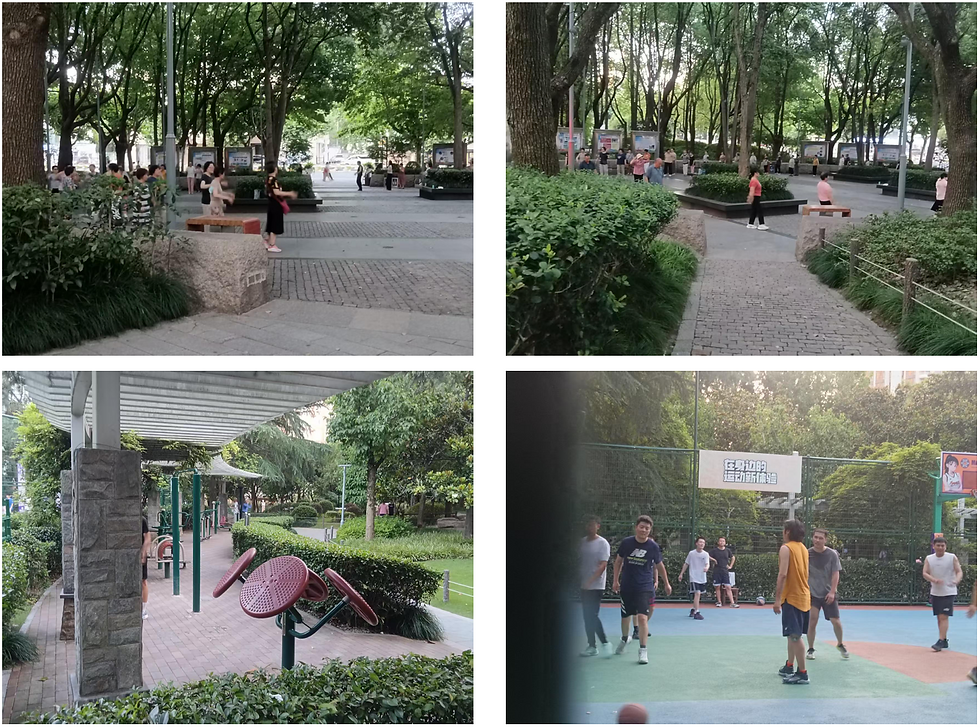
Huashan Lvdi isn’t just a peaceful retreat—it’s also a lively gathering spot for middle-aged and elderly locals. The park features open spaces for group dancing (广场舞), basic exercise equipment, and even a basketball court. It’s where movement meets community, offering a healthy dose of connection in the heart of the city.

Wukang Road (Historical and Cultural Street) (武康路历史文化名街)
This bustling tourist attraction comes alive during the holidays, with dazzling modern buildings standing alongside vintage streets steeped in history. The area is packed with visitors, all drawn to its vibrant energy and timeless charm—a perfect blend of old and new that captures the spirit of the city.
Wukang Road (武康路), tucked into the heart of the former French Concession, is more than just a charming street—it’s a time capsule of Shanghai’s cosmopolitan past. Originally built in 1897 and once known as Route Ferguson, it was designed by American educator John Calvin Ferguson to connect Nanyang Public School (now Shanghai Jiao Tong University) with the city. Over the decades, it became home to revolutionaries, writers, and diplomats, with over 30 historic buildings lining its leafy sidewalks. Today, Wukang Road is a designated National Historic and Cultural Street, where Mediterranean villas, Art Deco facades, and quiet cafés invite visitors to wander through layers of history and elegance.

Standing proudly at the southern end of Wukang Road, the Wukang Building (武康大楼)—formerly known as the Normandie Apartments—is one of Shanghai’s most iconic architectural landmarks. Completed in 1924 and designed by Hungarian-Slovak architect László Hudec, its striking wedge-shaped structure evokes the Flatiron Building in New York. Built in the French Renaissance style, it originally housed Western expatriates and later became home to many of China’s film legends. Today, it’s a magnet for photographers, history buffs, and anyone drawn to the charm of the former French Concession.

If you're planning to explore Wukang Road by bike, I recommend parking nearby before diving in. On public holidays, the crowds can get overwhelming—making it tough to navigate or cover much ground. With tourists flooding the vintage streets and snapping photos at every turn, walking becomes the best way to soak in the charm without the hassle.


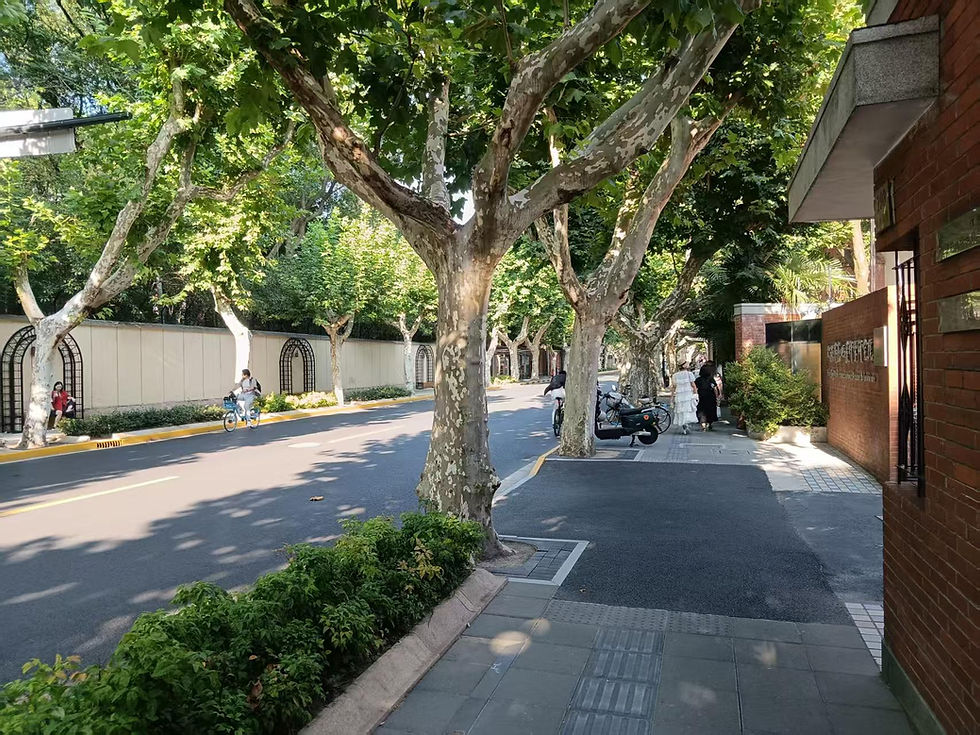
After weaving through the crowds on my bike, I finally reached a quieter pocket of the city—the vintage streets that echo the elegance of the former French Concession. The towering plane trees lining the sidewalks are a signature of the area, casting dappled shadows and adding a timeless charm. But even here, progress was slow. The narrow lanes were packed with parked cars, turning what should’ve been a breezy ride into a careful crawl.

Tucked away on Huaihai Middle Road in , I passed the Soong Ching Ling Memorial Residence (宋庆龄故居), which offers a quiet yet powerful window into the life of one of China’s most revered figures. Once home to Soong Ching Ling—wife of Sun Yat-sen and later Vice President of the People’s Republic of China—this elegant 1920s villa served as both her residence and a meeting place for world leaders and revolutionaries2. Surrounded by camphor trees and filled with personal artifacts, the house preserves her legacy of diplomacy, resilience, and national pride. Today, it stands as a peaceful tribute to a woman known as the “Mother of Modern China.”
As I strolled peacefully through the park, I happened to catch a quiet marvel—a flower-pollinating insect hard at work, nestled on a bloom. It was one of those small, fleeting moments that remind you how alive and intricate nature really is. Absolutely amazing.
This marks the end of our 8th Shanghai tour, and I hope you all enjoy it as much as we did. As always, stay tuned for our bimonthly trip updates!


Comments